





When warm meets cold, droplets of water form on the warm surface and this is a very common issue in London, where the climate is naturally damp. Condensation can seriously damage plaster, skirting and architrave and it is primarily an issue in the cold winter months. If not addressed, condensation can lead to significant damage to a building, which is why you should have regular damp inspections.
What Are the Primary Causes of Condensation?
Condensation can be caused by the following:
- Inadequate heating
- Lack of ventilation
- Hot bath/shower in a closed space
- Drying wet clothing indoors
- Leaking water pipes and drains
- Leaking roof
- Poor insulation
- Damp penetrating internal walls
Keeping the home warm and wiping away condensation minimises the risk of mould forming, while opening windows when running hot water allows moist air to escape. If you are unsure what is causing droplets of condensation to form on your windows or walls, we use state-of-the-art equipment to accurately diagnose all damp and mould issues.
How to Prevent Condensation
It is critical to remove moisture in the air and that means adequate ventilation and periodically whole-house heating, which should have a positive effect on minimising condensation. The importance of generating air movement cannot be overemphasised; this can be achieved by installing several extractor fans in key locations or opening a few windows. Of course, bathrooms and kitchens are prime spaces for condensation and the use of a portable dehumidifier can greatly reduce excess moisture.
Condensation Can Be a Sign of Rising or Penetrating Damp
Both rising damp and penetrating damp can lead to droplets of moisture forming on windows and walls and in order to be absolutely sure what is causing condensation, you should book an independent damp survey with London Damp Specialists. We have a team of PCA-certified damp surveyors and they have seen everything and can accurately source the cause of your condensation issues. If, for example, we find that rising damp is the cause of the condensation, the treatment might involve repairing or replacing the DPC or even injecting a chemical DPC into the cavity walls.
Effective Strategies to Reduce Condensation
There are things that you can do to reduce the risk of condensation in your London home, such as:
- Avoid drying damp garments indoors
- Whole heat the house from time to time
- Open windows when cooking and running a hot bath/shower and keep the door closed
- Use a portable dehumidifier to dry out specific spaces
- Inject a chemical insulator into cavity walls to improve insulation
- Generate adequate ventilation throughout the property
- Wipe up droplets of water when they form to prevent damage
All of the above can help to reduce the risk of condensation in the winter months and if you would like professional advice, book an independent damp survey with us and one of our PCA-certified surveyors will inspect your home and source the causes of condensation.
Condensation Treatment
There are numerous ways to effectively treat condensation, which are as follows:
- Injectable insulation into cavity walls
- Remove damp plaster and apply waterproof render
- Installation of thermal plasterboard
- Waterproof skim plaster and paint
If your home has a condensation problem and you are looking for a professional assessment, contact London Damp Specialists, a family-run company that has been damp-proofing London homes since 1981. We can survey the property and offer a competitive quote for the best long-term solution and what’s more, we fully guarantee our damp-proofing work for 30 years.
Our Work Process
At London Damp Specialists, we have a smooth process that begins with an initial consultation, which gives the customer an opportunity to ask questions, while we can gather essential information. The next step is a site visit when our certified damp surveyor inspects the property, which involves taking measurements, recording data and making observations. We then provide the customer with a detailed report, along with a quote for the recommended treatment, and should the customer be in agreement, a work schedule is set. The work is then completed according to the timeline and once the customer is satisfied, payment is made.
Call London Damp Specialists on 020 8242 9391 or complete the survey booking form on this website and we will be in touch in good time.
Find out what our customers have to say
View all reviews on


30-Year Warranty + 10-Year Insurance-Backed Guarantee
Your damp repair is protected for decades.
- 30-Year Warranty: All remediation work is covered by a 30-year workmanship warranty, protecting your property against recurrence of the treated issue.
- 10-Year Insurance-Backed Guarantee (IBG): Your guarantee is insurance-backed for 10 years through Quality Assured National Warranties (QANW), so your cover remains valid even if we’re unable to fulfil it ourselves.
- 24-Hour Report Delivery: Comprehensive digital survey reports are typically issued within 24 hours of the inspection’s completion.


Qualification list
PCA-Certificated Surveying
-
CSDB (Certificated Surveyor of Dampness in Buildings): This certification ensures your damp diagnosis is carried out to a recognised industry standard.
-
CSTDB (Certificated Surveyor of Timber and Dampness in Buildings): This means we can assess timber decay, wet rot, dry rot and wood-boring insect activity in the same visit, giving you a complete picture of your property’s condition.
-
CSSW (Certificated Surveyor in Structural Waterproofing): Where basement or below-ground waterproofing is involved, this certification ensures that any tanking or structural waterproofing solution we recommend is specified the first time correctly.

CSCS
-
CSCS (Construction Skills Certification Scheme): Our experts carry a CSCS card, which confirms they’re authorised and trained to work safely on-site, giving you confidence that the team in your home meets recognised industry safety standards.

Asbestos awareness
-
Asbestos awareness: Older properties may contain asbestos, particularly in areas where damp and timber work are common. Our team holds UKATA-accredited Asbestos Awareness training as standard and where a job risks disturbing such materials, our experts are more than qualified to manage the work safely and in full compliance with UK regulations.

Professional Damp Diagnostic Equipment
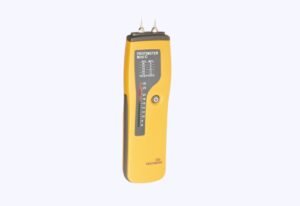
Electronic Moisture Meter
Purpose:
Takes comparative moisture readings from accessible walls, floors, ceilings and other surfaces to identify abnormal moisture patterns.
Common Uses / Notes:
Helps the surveyor map affected areas and identify patterns associated with rising damp, penetrating moisture, condensation and potential leaks. Readings support the survey but are not a diagnosis on their own.
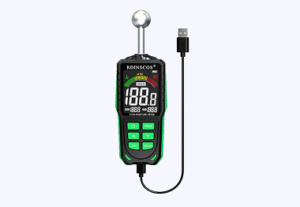
Deep-Reading Moisture Meter
Purpose:
Investigates below the immediate surface of building materials without requiring extensive removal of finishes.
Common Uses / Notes:
Helps locate moisture within walls, beneath accessible floors, inside subfloor areas and deeper within the building fabric where hidden moisture is suspected.
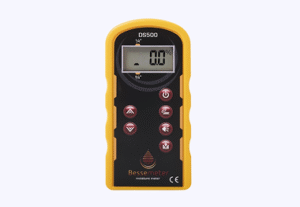
Non-Destructive Moisture Scanner
Purpose:
Checks for changes in moisture beneath walls, ceilings and flooring non-invasively without puncturing or damaging the finished surface.
Common Uses / Notes:
Ideal for decorated walls, ceilings and flooring where pin testing would be undesirable. Useful for tracing water migration paths and comparing dry areas against suspected damp sections.
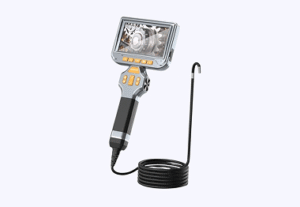
High-Definition Borescope Camera
Purpose:
Provides a close visual inspection of concealed or difficult-to-access spaces without opening up large sections of the building.
Common Uses / Notes:
Used beneath floors, inside wall cavities, behind linings and around hidden pipework to uncover leaks, hidden moisture, timber decay, or construction defects with minimal disturbance.

4K Aerial Drone
Purpose:
Captures high-resolution images of roofs, chimney stacks and other inaccessible high-level external areas.
Common Uses / Notes:
Inspects roof coverings, chimney stacks, flashing, guttering, parapet walls, valleys, high-level brickwork and difficult elevations to reveal defects linked to penetrating damp and water ingress. Subject to weather, safety rules and flight regulations.
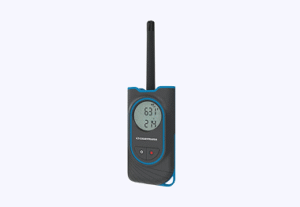
Indoor Humidity Monitor
Purpose:
Measures the amount of moisture held within the indoor air (relative humidity and temperature).
Common Uses / Notes:
Helps determine whether high ambient humidity, insufficient ventilation, or surface condensation could be contributing to black mould growth and damp conditions.
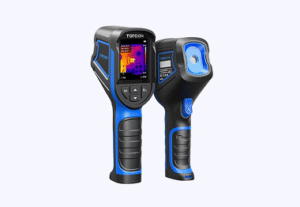
Infrared Thermal Imaging Camera
Purpose:
Displays surface temperature variations across walls, floors and ceilings.
Common Uses / Notes:
Assists in identifying cold bridging, condensation risk, insulation irregularities, thermal patterns and hidden water leaks. Interpreted alongside physical moisture readings rather than treated as proof of damp on its own.
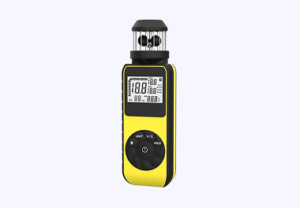
Ventilation and Airflow Tester
Purpose:
Tests the extraction performance and airflow velocity of mechanical extractor fans and ventilation outlets.
Common Uses / Notes:
Assesses extractor fans in kitchens, bathrooms and utility rooms to determine whether moisture-producing areas have sufficient extraction rate (L/s or m3/h) to control humidity, condensation and mould risk.
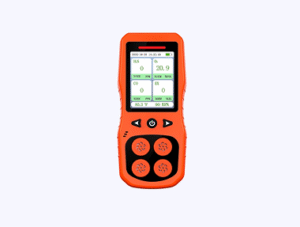
Multi-Gas Detection Equipment
Purpose:
Screens indoor air to identify certain gases present within the property.
Common Uses / Notes:
Supports investigations involving drain smells, suspected sewer gases (H2S, NH3, CH4), combustion concerns (CO, O2) and flammable gases (CH4, C3H8). Does not replace testing or certification by a Gas Safe registered engineer.
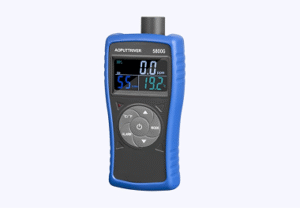
VOC and Chemical Vapour Monitor
Purpose:
Screens the air for Volatile Organic Compounds (TVOC/VOC) and chemical substances such as formaldehyde (HCHO).
Common Uses / Notes:
Useful when investigating unusual chemical smells, building material emissions/off-gassing, conditions following water damage, or general indoor air quality concerns.
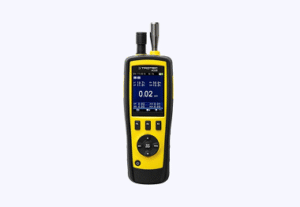
Fine Particle Monitor
Purpose:
Measures airborne material and particle concentrations across precise size ranges, including PM1.0, PM2.5 and PM10.
Common Uses / Notes:
Supports investigations involving fine dust, smoke, poor indoor air conditions and environments affected by post-leak damage or extensive mould contamination.
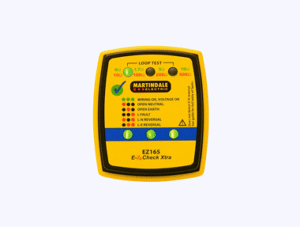
Socket and RCD Testing Device
Purpose:
Provides limited, basic electrical safety and protective circuit screening during the inspection.
Common Uses / Notes:
Helps identify certain socket wiring problems, confirms the operation of Residual Current Device (RCD) protection and detects AC voltage in damp areas. Does not constitute a full electrical inspection or an Electrical Installation Condition Report (EICR).
Equipment & Inspection Levels
Select Your Survey
Standard Damp Inspection
Standard price: £299 + VAT
Special offer: £199 + VAT (Limited Time Offer)
Repair Deduction: Full survey cost deducted if remedial work is instructed.
The Level 1 service is a straightforward inspection of accessible internal areas. It is intended for isolated or relatively simple concerns that do not initially require advanced diagnostic technology.
Survey Equipment
- Digital damp meter
Inspection Coverage
- Accessible wall surfaces
- Accessible flooring
- Ceilings
- Visible drainage and plumbing leak checks
- Damp prevention and property-care information
Who Should Choose Level 1?
localised rising damp or wants an introductory check of the main accessible areas.
A standard damp meter is used to identify and compare areas of elevated moisture. The service does not include deeper material scanning, timber-decay inspection, thermal imaging or roof-level drone photography.
Customers requiring an inspection for a property purchase or a possible concealed problem should consider Level 2 or Level 3.
If we complete the recommended repairs, the survey cost will be deducted from the work.

Detailed Damp & Timber Inspection
Standard price: £399 + VAT
Special offer: £299 + VAT (Limited Time Offer)
Repair Deduction: Full survey cost credited against remedial work carried out by us.
The Level 2 service contains all Level 1 checks and adds specialist testing for deeper moisture and timber-related problems.
Survey Equipment
- Digital damp meter
- Deep-penetration moisture meter
- Non-destructive moisture scanner
Inspection Coverage
- Walls, flooring and ceilings
- Visible plumbing and drainage leak checks
- Deep moisture measurements
- Scanning of suitable finished surfaces
- Accessible subfloor moisture investigation
- Wet rot assessment
- Dry rot assessment
- Woodworm inspection
- Damp prevention and maintenance information
Who Should Choose Level 2?
Level 2 is suitable when moisture may be concealed beneath the surface or when the condition of structural and finishing timbers is a concern.
The additional equipment can help examine moisture within building materials and below accessible floors without automatically removing finishes. Timber is checked for evidence associated with rot, decay and wood-boring insect activity.
This service is particularly suitable for buyers and vendors wanting a more comprehensive damp and timber assessment before a sale proceeds.
The amount paid for the survey will be credited against remedial work carried out by us.
Advanced Building Moisture Survey
Standard price: £499 + VAT
Special offer: £399 + VAT (Limited Time Offer)
Repair Deduction: Survey price deducted when we are appointed to undertake recommended remedial work.
Level 3 is our most extensive damp survey. It includes everything provided with Levels 1 and 2 and introduces advanced imaging, environmental measurement, ventilation testing and high-level external inspection.
Survey Equipment
- Digital damp meter
- Deep-penetration moisture meter
- Non-invasive moisture scanner
- Infrared thermal imaging camera
- Relative humidity monitor
- High-definition borescope
- Ventilation and airflow tester
- 4K survey drone
- Socket and RCD testing device
Inspection Coverage
- Accessible walls, floors and ceilings
- Plumbing and drainage leak checks
- Deep and non-invasive moisture detection
- Wet rot, dry rot and woodworm inspection
- Accessible underfloor and subfloor checks
- Thermal imaging survey
- Indoor humidity assessment
- Borescope investigation where appropriate
- Extractor-fan airflow testing
- Visible damp-proof course assessment
- Brickwork and pointing inspection
- Roof-covering inspection
- Chimney stack and flashing inspection
- Guttering and rainwater-system inspection
- High-level external photography
- General visible structural observations
- Basic electrical socket and RCD screening
Who Should Choose Level 3?
This is the preferred option for customers seeking the widest possible investigation of dampness and related building defects. It is particularly useful for property purchases, older buildings, basement homes and situations where several possible moisture sources must be considered.
The inspection assesses more than internal damp patches. It considers how the roof, chimney, external masonry, ventilation, indoor humidity, drainage, plumbing and building construction may be contributing to the condition.
Drone photography is especially valuable for buyers because roof defects can be difficult to observe during a normal property viewing. Damaged flashing, displaced tiles, deteriorated chimney pointing and overflowing guttering can allow water to penetrate the building and cause hidden deterioration.
Roof and chimney repairs can be expensive. Identifying a defect before exchange may help the purchaser plan repairs, reconsider the transaction or negotiate with better information.
Level 3 is therefore suitable for buyers, sellers and existing owners who want a thorough, evidence-based understanding of the property before making significant financial decisions.
The survey price will be deducted when we are appointed to undertake the recommended remedial work.
Specialised Laboratory Testing Add-Ons
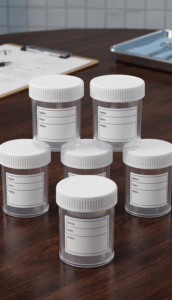
Laboratory Analysis of Plaster Samples
Price £299 + VAT
(The cost of this add-on is credited against remedial work completed by us).
Plaster samples are carefully taken from affected walls and sent to an independent laboratory for detailed chemical analysis. The laboratory measures the presence and concentration of hygroscopic ground salts, including chlorides and nitrates.
Why it matters: Ground moisture carries soluble salts through masonry, which remain trapped in plaster after water evaporates and continue drawing moisture from the air.
Diagnostic value: Differentiates true rising damp from condensation, rainwater penetration, or historic plumbing leaks.
This service can be beneficial when:
- Rising damp has been suggested but remains uncertain.
- The moisture pattern is irregular.
- Previous damp-proofing work has been completed.
- Meter readings conflict with the visual evidence.
- Condensation and rising damp must be differentiated.
- Independent scientific evidence is desirable.
Note: Salt results cannot be considered in isolation. The surveyor will also assess external ground levels, wall construction, ventilation, plumbing, rainfall exposure and any visible damp-proof course. As physical material must be collected, minor holes or damage to the plaster will be necessary. This is the only optional test involving invasive sampling. The cost of the survey will be credited against remedial work completed by us.
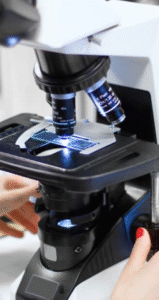
Mould Laboratory Testing & qPCR DNA Analysis
Price £299 + VAT
(The cost of this add-on is deducted from the final repair cost when we undertake the recommended work).
Swab or lift samples collected from affected surfaces are analysed by an accredited laboratory using advanced qPCR DNA testing methods.
Why it matters: Identifies exact mould species, calculates spore contamination levels and reveals concealed mould growth invisible to visual inspection.
Diagnostic value: Establishes whether mould contamination is minor or widespread, guiding environmental remediation and ventilation strategies.
This service can be beneficial when:
- A musty smell remains, but visible mould is limited.
- Mould returns shortly after cleaning.
- There has been a historical flood or leak.
- Hidden contamination is suspected.
- Mould has developed behind furniture.
- Cupboards or enclosed rooms smell damp.
- Independent confirmation is required.
- The scale of contamination must be established.
Note: Results can help determine whether the samples show relatively minor contamination or evidence of a more extensive mould condition. This information may assist with the planning of cleaning, removal and remediation measures. Mould testing does not remove the need for a moisture survey. The water source, humidity problem or ventilation defect supporting the growth must also be identified and corrected. When we undertake the recommended work, the survey amount will be deducted from the final cost.
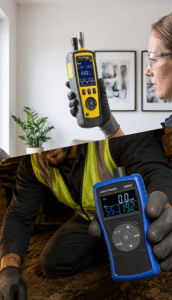
Gas, Vapour & Airborne Contaminant Assessment
Price £299 + VAT
(The survey fee is deducted if we complete the resulting remedial work).
A broad indoor air quality, gas and particulate screening service tailored to specific client concerns or property conditions.
Testing Options:
- Indoor air-quality assessment- IAQ
- Volatile organic compounds- TVOC/VOC
- Formaldehyde- HCHO
- Fine airborne particles- PM1.0, PM2.5 and PM10
- Dust and smoke particles- PM1.0, PM2.5 and PM10
- Sewer gas screening- H2S, NH3 and CH4
- Flammable gas screening- CH4 and C3H8
- Carbon monoxide- CO
- Hydrogen sulphide- H2S
- Ammonia- NH3
- Oxygen levels- O2
- Stale-air and ventilation assessment- IAQ and TVOC
- Drain odour investigation- H2S, NH3 and CH4
- Chemical smell investigation- TVOC, VOC, HCHO and NH3
- Post-leak air and surface-condition checks- PM2.5 and TVOC
- Combustion gas screening- CO, O2 and CH4
- Building-product off-gassing assessment- TVOC and HCHO
- General pollutant screening- PM1.0, PM2.5, PM10 and TVOC
Diagnostic value: Damp buildings can sometimes develop air-quality problems that are not visible. Wet materials, microbial activity, slow-drying water damage and insufficient air exchange may contribute to unpleasant indoor conditions.
This service can be beneficial when:
- Persistent drain smells
- Sewage-type odours
- Stale or musty indoor air
- Chemical smells
- Suspected material off-gassing
- Fine particles after renovation
- Conditions following flooding
- Poorly ventilated rooms
- Odours linked to stagnant or trapped water
Note: Foul smells can result from several different sources, including damp building materials, contaminated water, drainage defects, sewer gases or chemical vapours. Targeted measurements can help narrow down the possibilities and guide any further specialist investigation. This service is intended as property-condition screening. It does not replace specialist assessments by environmental consultants, Gas Safe engineers, occupational hygienists or medical professionals when these are necessary.
Contact Us
If you have some questions, please complete this form:
Book and Pay for a survey
If you are ready to book a survey and pay, please complete this form:

Contact Us
If you have some questions, please complete this form:
Book and Pay for a survey
If you are ready to book a survey and pay, please complete this form:
Contact Us
If you have some questions, please complete this form:
Book and Pay for a survey
If you are ready to book a survey and pay, please complete this form: